HSC Institute for Translational Research awarded NIH grant to study retinal scanning research to detect early-stage Alzheimer’s
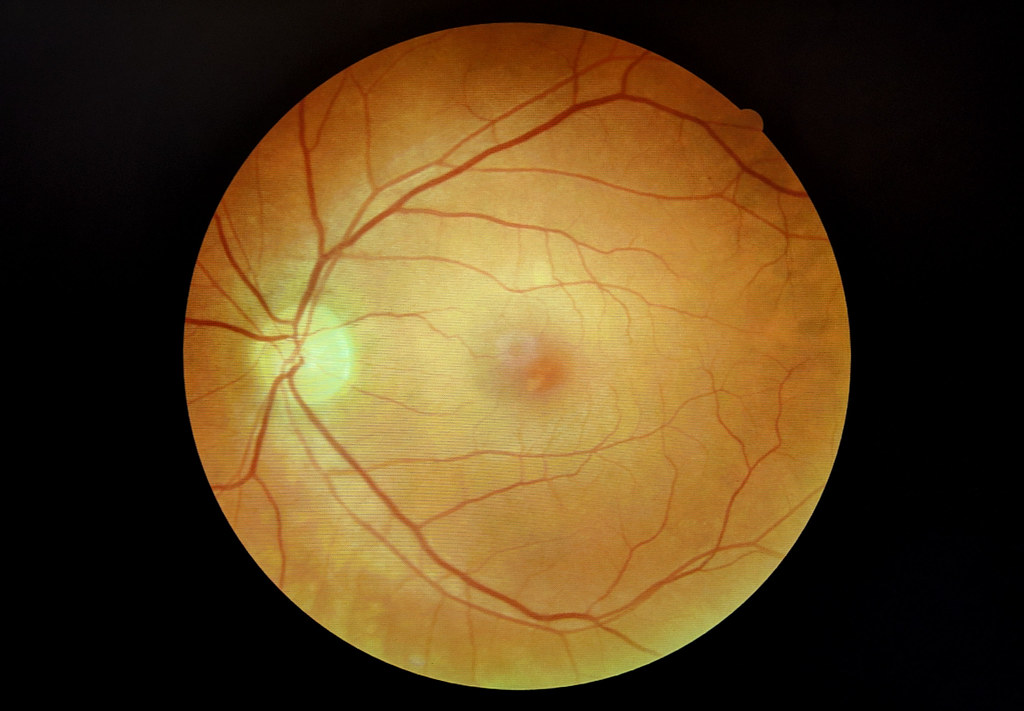
The Institute for Translational Research at The University of North Texas Health Science Center at Fort Worth is the recipient of a five-year, $1.42 million grant from the National Institute on Aging, part of the National Institutes of Health, to study the use of retinal imaging for screening early changes associated with Alzheimer’s disease.
This is the second grant the institute has received in the last six weeks from the NIH for research related to Alzheimer’s disease. On Oct. 3, it was announced that ITR was awarded a five-year, $148.78 million grant to conduct the first-ever large-scale study of the biology of Alzheimer’s disease within a health disparities framework across the three largest racial and ethnic groups in the U.S. – African American, Hispanic and non-Hispanic white.
The new project, “Longitudinal validation of retinal biomarkers against cerebral imaging in preclinical Alzheimer’s disease,” could help provide a low-cost, minimally invasive screening technique to detect Alzheimer’s disease before symptoms appear.
“This study will enable us to evaluate retinal biomarkers longitudinally, which has been a huge need in this area of research and will drive us forward in biomarker discovery,” said Dr. Sima Mozdbar, an assistant professor at the HSC School of Biomedical Sciences’ North Texas Eye Research Institute.
The multisite grant is being led by Dr. Jessica Alber and Dr. Peter Snyder with the University of Rhode Island. The Alpert Medical School of Brown University will be the primary clinical site. HSC and the Washington University School of Medicine in St. Louis will serve as the other clinical sites for the study.
The NIH grant builds upon Alber’s work with the Atlas of Retinal Imaging in Alzheimer’s Study, or ARIAS. The ARIAS study was launched in 2020 to create a reference database of structural, anatomic and functional imaging of the retina to develop markers of Alzheimer’s disease risk and progression.
Dr. Mozdbar will serve as the site’s primary investigator. Dr. Melissa Petersen, an assistant professor in HSC’s Texas College of Osteopathic Medicine, will be the co-investigator leading the ARIAS biorepository and proteomic assays.
“Understanding changes in the eyes offers potential novel ways for the early detection of Alzheimer’s disease that are accessible to all, including those in underserved communities,” Petersen said.
At HSC, this multischool collaborative study will be run through ITR in collaboration with TCOM, the School of Biomedical Sciences and the North Texas Eye Research Institute. The ITR is serving as the biomarker core for the study.
The project aims to evaluate the sensitivity and specificity of retinal biomarkers for the detection of disease risk and progression while using ARIAS as a platform for moving from the discovery to the validation phase.
In addition to validating the retinal imaging biomarkers identified during the ARIAS study, the newly funded study, called ARIAS 2, will explore the potential for using Alzheimer’s disease blood plasma biomarkers in tandem with retinal imaging for greater sensitivity in detecting early-stage disease.
Alzheimer’s disease is the most common neurodegenerative dementia, disproportionally impacting African Americans and Hispanics.






Social media